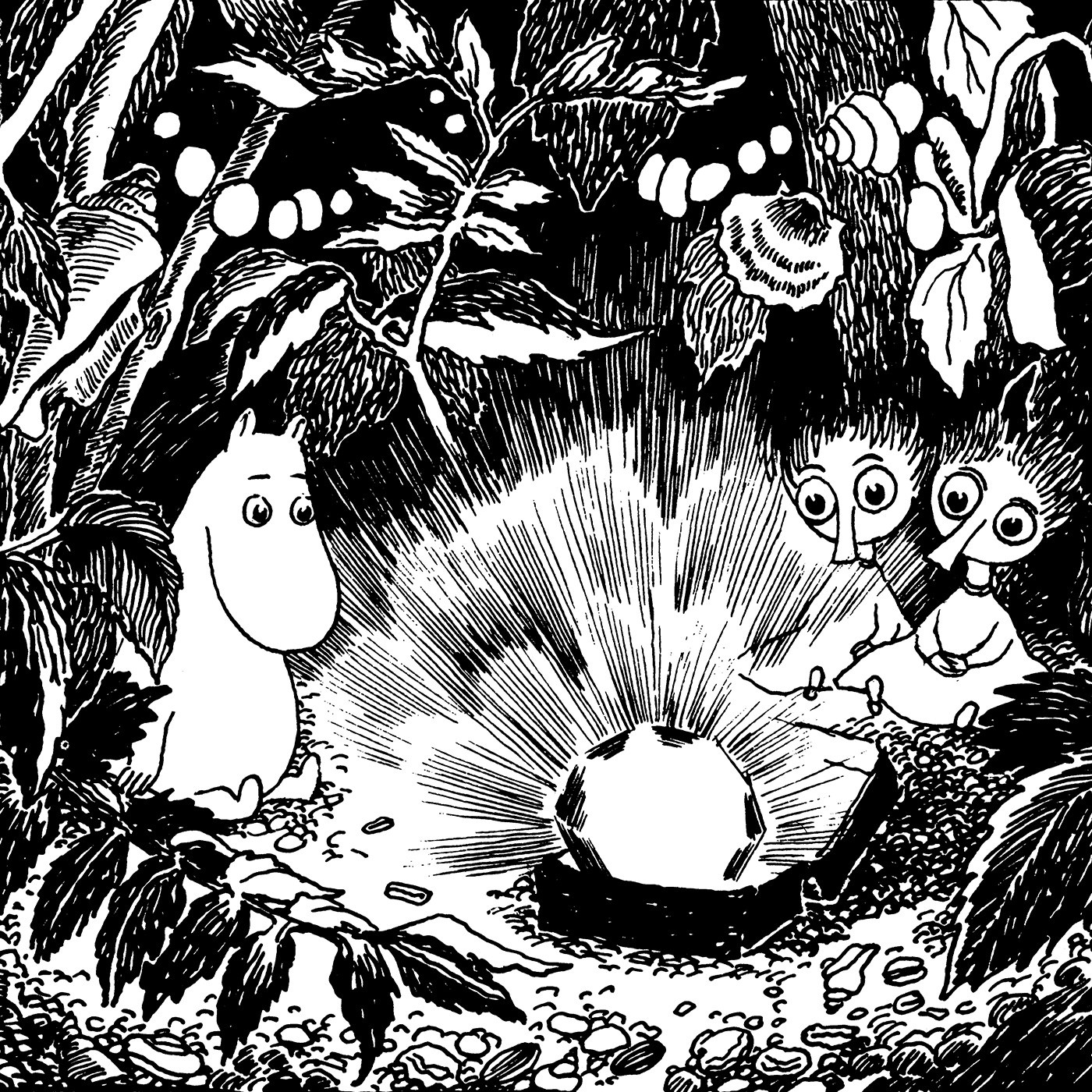
In 1950, Finn Family Moomintroll was published in the UK. It was the first of Tove Jansson’s books about the curious denizens of Moominvalley to be translated into English. The first two books in the series, the apocalyptic Moomin and the Great Flood and Comet in Moominland, were written as a reaction to the horrors of the the Second World War. But their catastrophic storylines were perhaps considered a little too dread laden to be suitable for British children still living in the shadow of war.
This novel was, on the face of it, a distinctly more sunny proposition and a perfect introduction to Jansson’s clan of pot-bellied, hippo-esque creatures and their peculiar extended family. Among them Snufkin, a nomadic philosopher and Little My, a child small enough to fit in a tea pot, but ferocious enough to bite your finger off. To post war children they must’ve appeared like a blast of sunshine after a long winter.
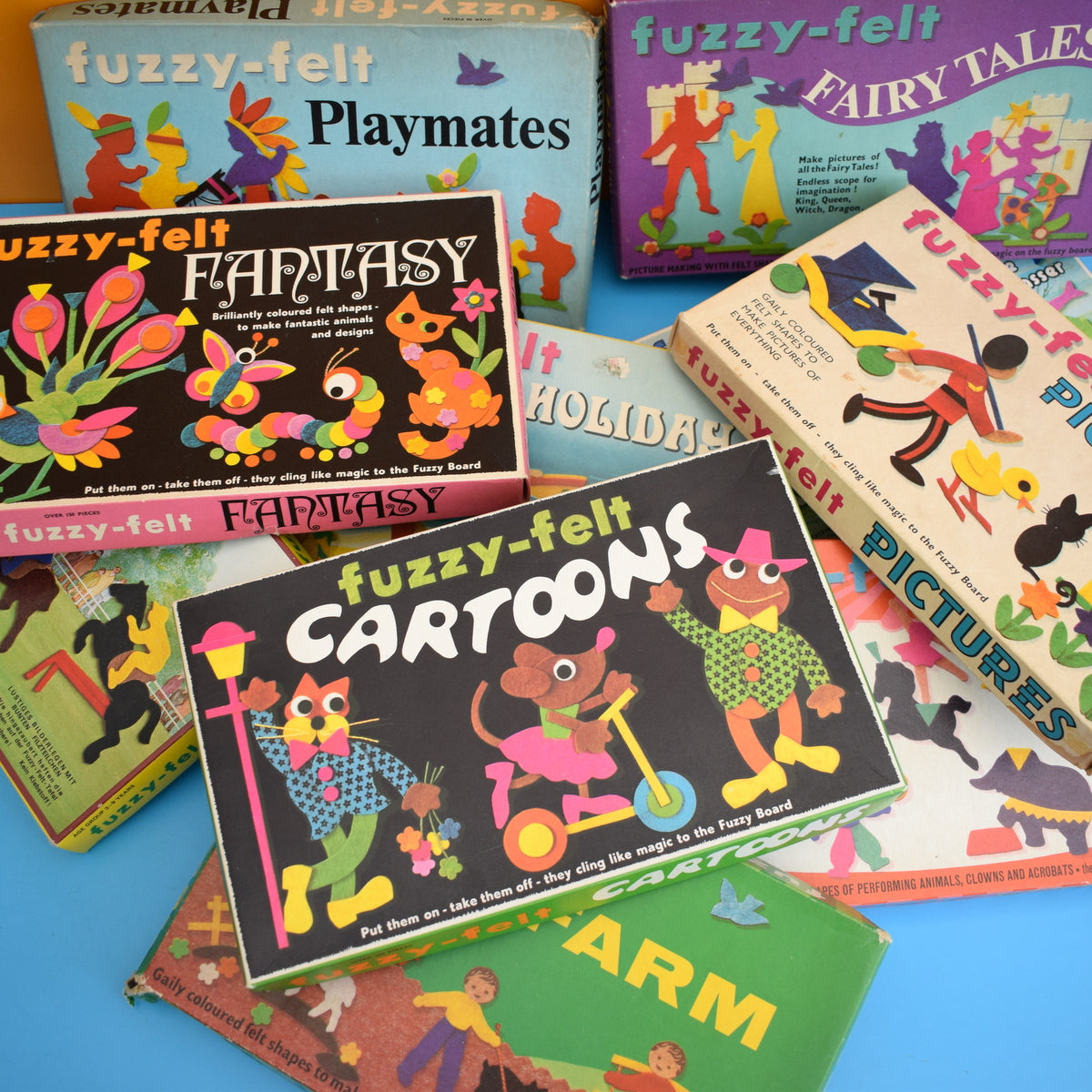
1950 also saw the arrival of another equally vibrant product in British kids’ lives, one that would later become inextricably bound with the Moomins. Fuzzy Felt, was a fabric toy, containing hundreds of cut out shapes which could be affixed to a felt board and arranged to create simple scenes. Themed sets included Farm, Jungle, Ballet, Cartoon and Fantasy, all packed with simple silhouetted shapes of animals and props that could be organised in an infinite variety of ways, tapping into the story-telling potential of its young users.
Fuzzy Felt was another byproduct of the war. Lois Allan, an American woman living in Surrey and her Scottish husband Peter turned their outbuildings into production site for the manufacture of felt gaskets used to seal components in tanks. Allan also ran a nursery for workers’ children, who she discovered enjoyed playing with the felt offcuts, sticking the fuzzy shapes onto the backs of table mats.
The business grew and grew, and by its peak in the mid 1970s, Allan Industries were shifting a million sets a year. As the tactile, cosy goodness of Fuzzy Felt became a staple of childhood play, it was perhaps not such a surprise when a new series from Poland debuted on British television made almost entirely from the material.
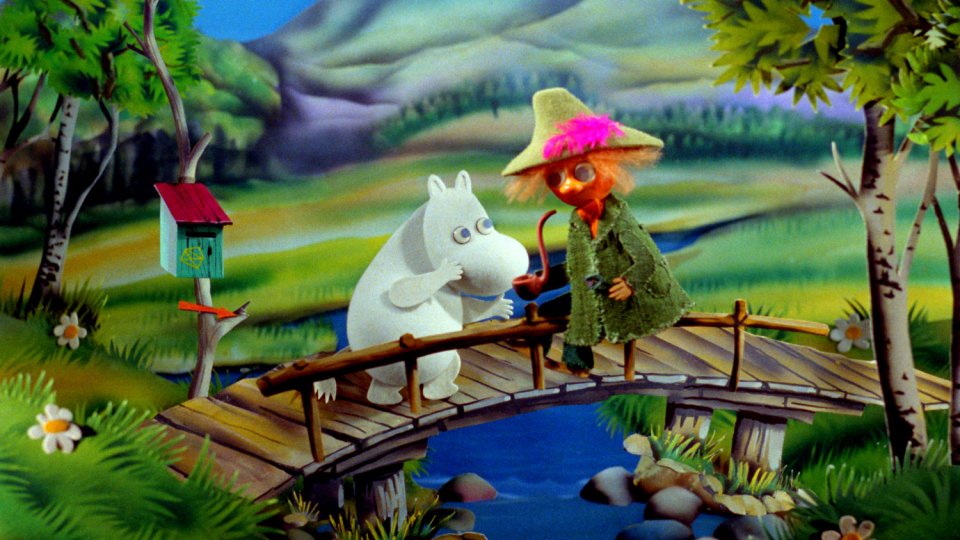
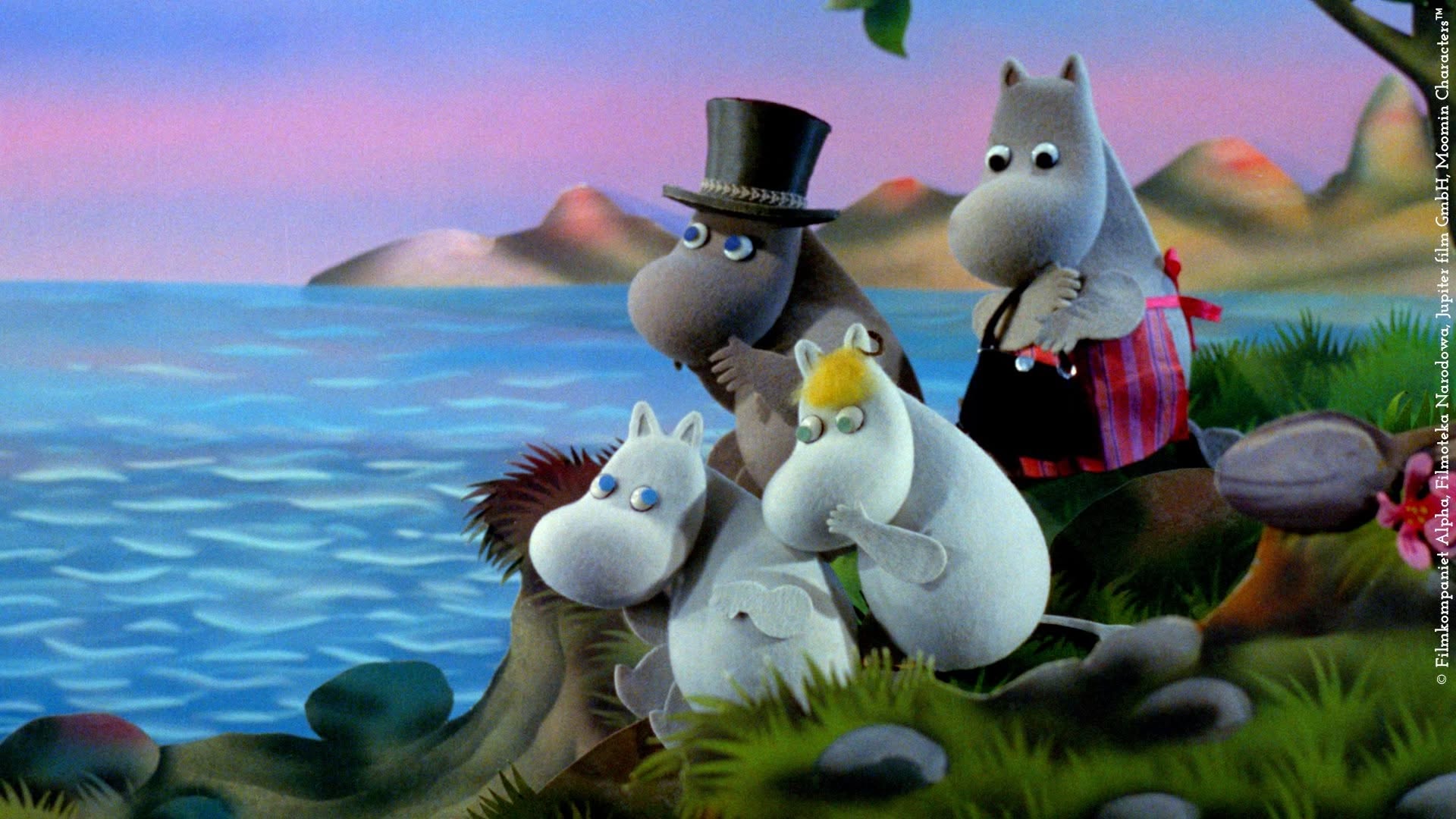
Season one of The Moomins first aired on ITV in January 1982 and ran for a hundred episodes until 1985. The stories were closely based on Tove Jansson’s novels and comic strips, and began with an adaptation of Finn Family Moomintroll. But despite all the felt on display this wasn’t the smiley, cuddly version of the Moomins viewers of ITV’s 4.15 slot might have been expecting and many parents complained that it was too frightening for their little ones.
‘It’s very difficult to pull off tension and horror in a children’s serial,’ the show’s writer, Anne Wood told Simon Sheridan in The A-Z of Classic Children’s Television. ‘There’s a definite fear factor in the Moomins. That scene where Moomintroll climbs into the Hobgoblin’s hat and then emerges as a monster, That is really frightening for little children. But the stop frame animation and the cuddly, toy like characters help children to accept these terrifying concepts.’
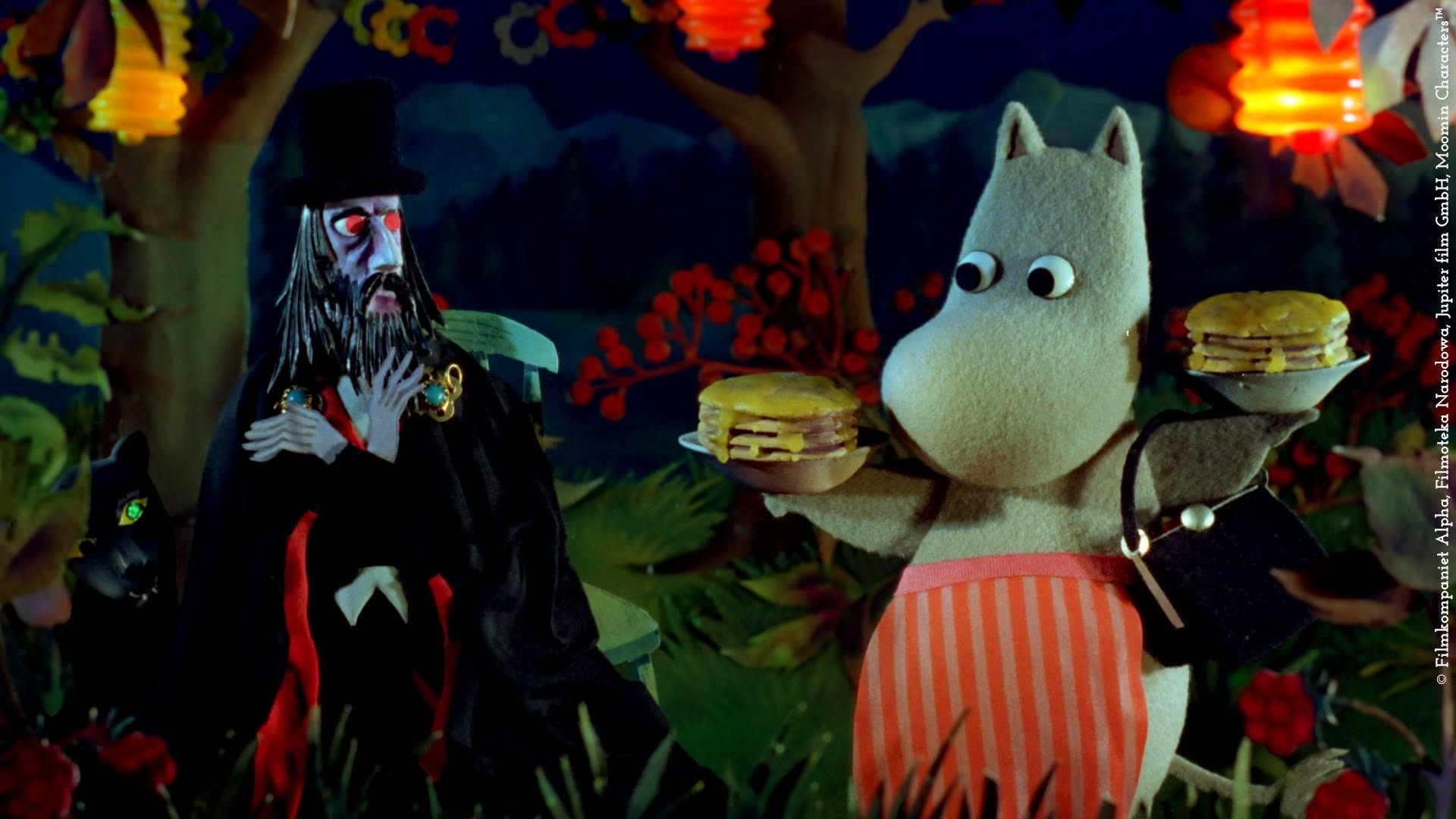
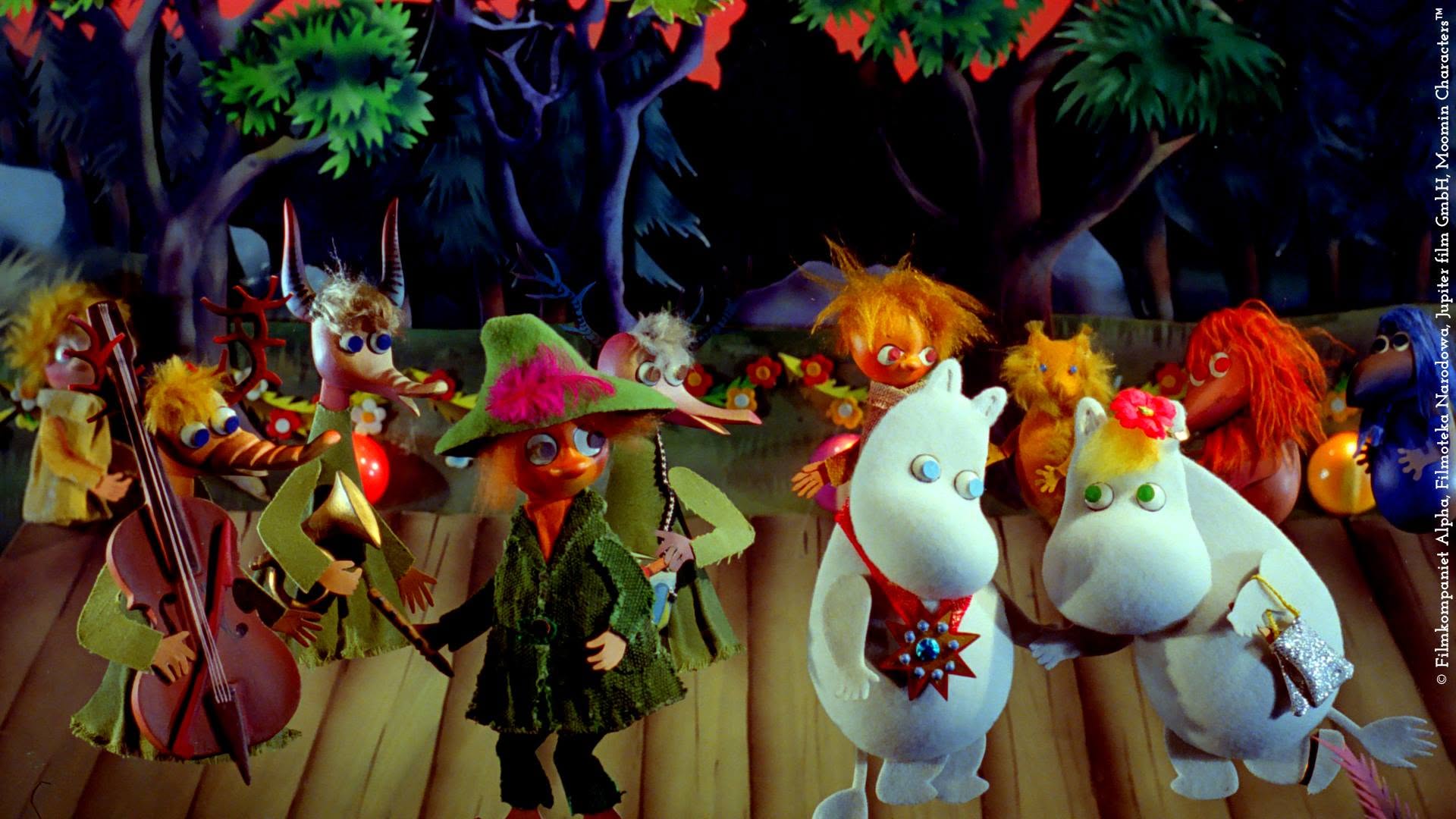
The show’s animators at Se-ma-for studios in Poland created the most faithful adaptation of Jansson’s stories before or since. Not only were the story lines faithful to the source material, but the characterisation, art style and crucially atmosphere all remained intact. Tove Jansson took a close interest in the series’ development, concerned, with good reason, about how her creations would appear on screen.
The Moomins already had a long, chequered history on television. The first attempt in 1959 was from a West German production company who created a puppet version, Die Muminfamilie. The results were faithful but basic, on a par with string assisted British shows such as Muffin the Mule.
Ten years later Jansson was approached by Tokyo Movie, a Japanese company owned by Sega. One of whose principal animators was a young Hayao Miyazake, the soon to be revered head of Studio Ghibli. Despite this pedigree Jansson was not impressed.
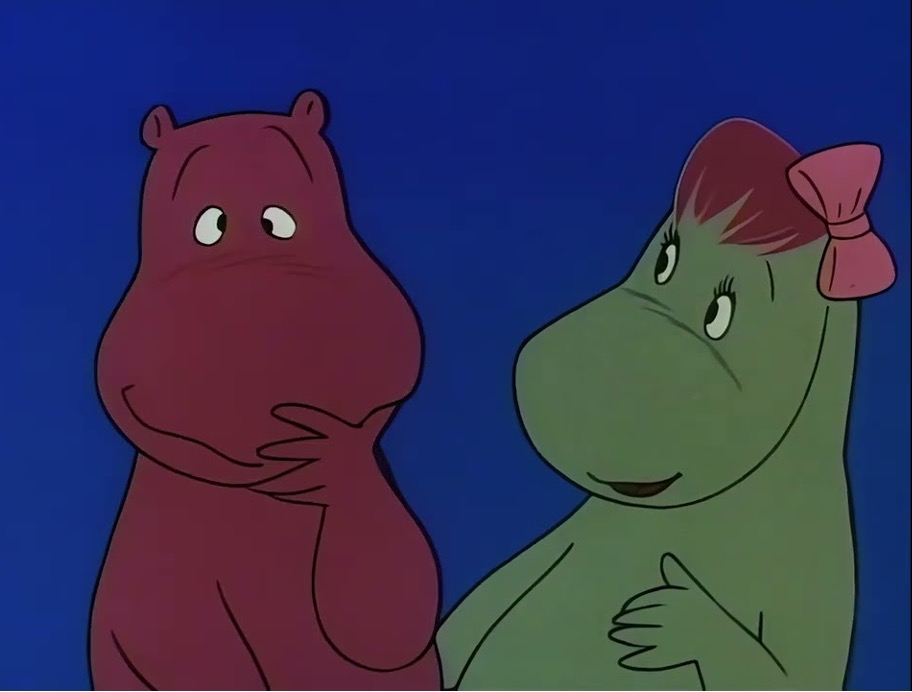
In a letter to the studio she criticised the Moomins’ mouths and their use of cars and alcohol. The interiors of the Moominhouse she thought resembled an office, while Moominmamma’s lack of handbag and the bow in Snork Maiden’s hair were a problem. But her most serious complaint concerned the use of violence, including guns. ‘It is unthinkable for Moominpappa to slap his son on the buttocks, and no one in this world slaps anyone on the buttocks. If they do get angry, for example, they will only hit each other’s heads with umbrellas and never use force of arms.’
Her conclusion was particularly damning. ‘Overall, the feeling of Moominvalley has been lost. It seems to me that the only way to save this mistake is for everyone involved in this work to read the Moomin books well, to become integrated into the Moomin world, and to feel and understand that feeling.’
Then in 1975, Walt Disney made an approach, asking for exclusive rights to the word ‘Moomin’ but was rejected. Despite having completed her novels and passed the comic strip onto her brother, Jansson retained full control over the Moomin business until the end. According to Tove’s niece Sophia Jansson Disney made a second unsuccessful bid following the author’s death in 2001. They wanted to buy ‘everything.’
Small wonder that she took a more hands on approach when, in 1977 the Polish production, Opowiadania Muminków (Moomin Stories) began. Burned by her experience with the Japanese she insisted there be no deviation from her original stories. Scripts were translated into Swedish and sent to Tove and her brother Lars, who would edit and before giving the green light for the particular episode begin.
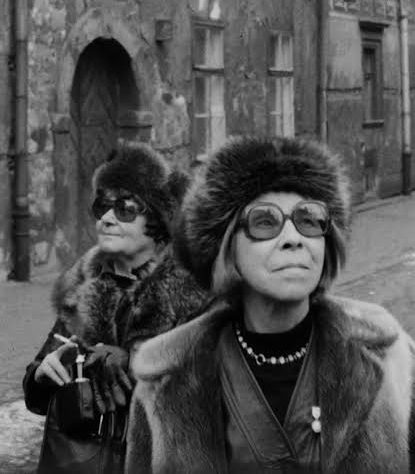
In January 1978 Tove Jansson travelled to Poland with her partner Tullikki and brother Lars to meet the animators and approve their designs. As the production was based in the communist Eastern Bloc, Tove could only be paid in cash in the local currency, and had to spend all she earned inside Poland. She later remembered: ‘Once I was in Warsaw for a puppet film and tried to spend zlotys wildly, but not much was spent – except for vodka.’
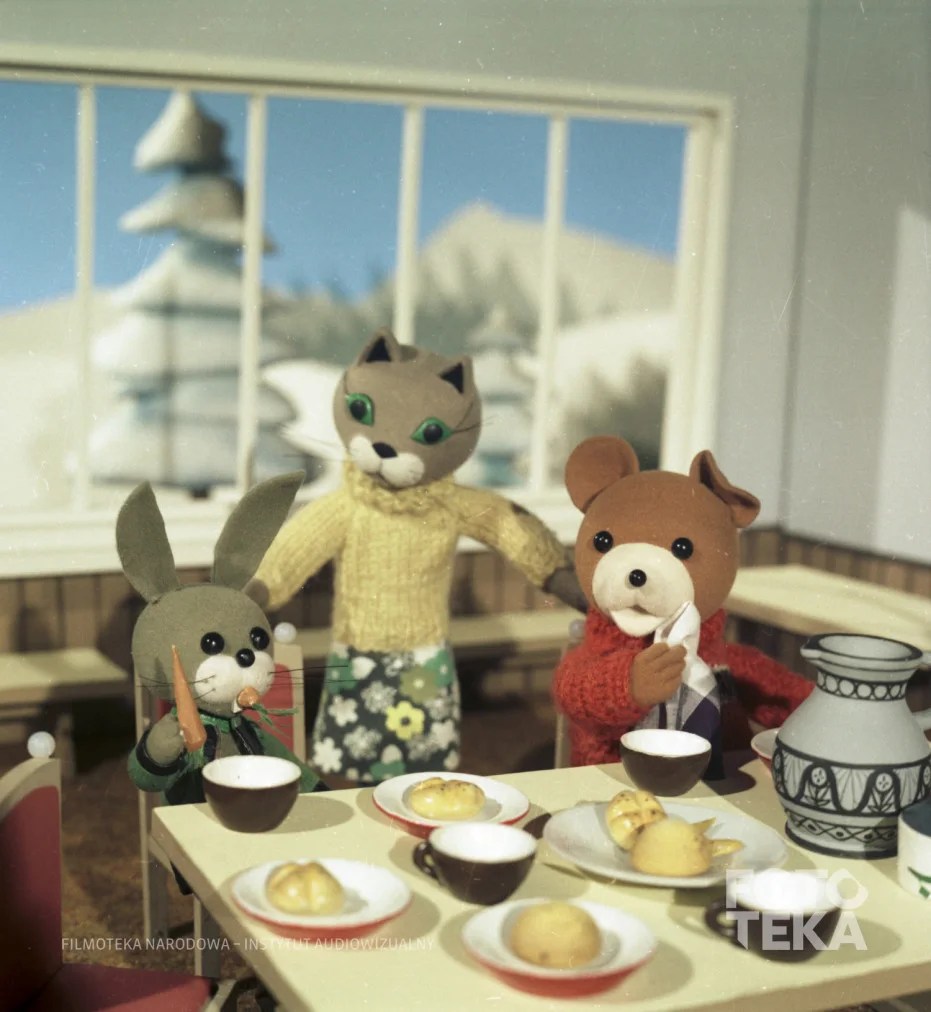
Se-Ma-For studio was one of leading producers of stop motion and puppet films in Poland, along with many more experimental films which found an audience worldwide. Se-ma-for translates as ‘the studio of small films’, a name shared with Oliver Postgate and Peter Firmin’s animation company in the UK. Like Smallfilms, who produced Bagpuss, the Clangers and Ivor the Engine, Se-ma-for created a host of iconic children’s programmes with characters like Maluch, a little car and The Adventures of Teddy Drop Ear.
The studio employed visual artists, many from a theatre background, and their abilities as set designers can be seen in the luscious, vividly coloured Moominvalley vistas. Adding texture to these painted backdrops a variety of additional materials were employed, including feathers, flowers, sand and glitter along with tactile fabrics such as corduroy, gingham and wool.

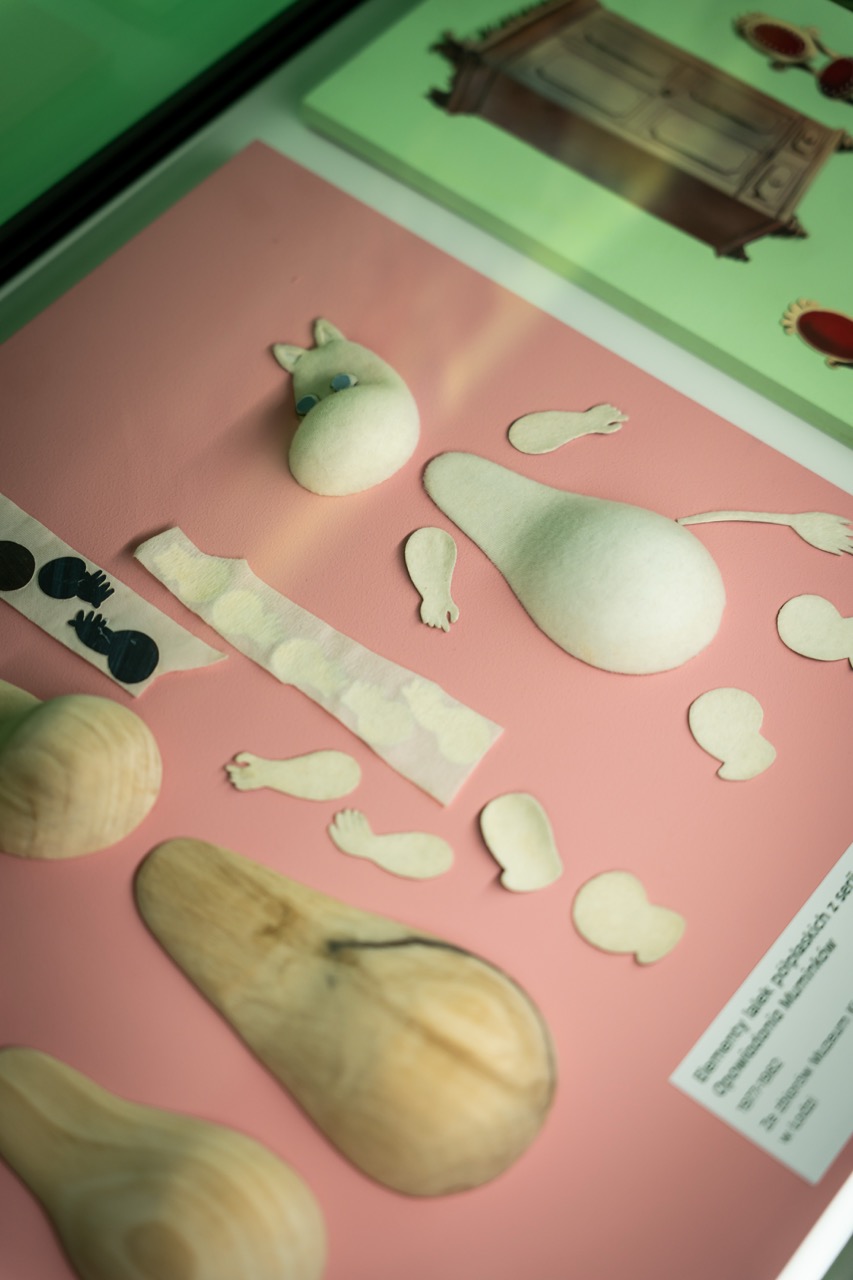
In the foreground were the cuddly Moomin puppets, who had a partially three dimensional look. These sculpted flat backed wooden figures were covered in fabric, while separate limbs were two dimensional, allowing movement in their arms, legs and tails. Objects such as cups and teapots were also created with flat backs, giving a slightly surreal look to Moomin teatime.
The world was given depth by means of a multiplane rig, made up of three stacked glass plates. A camera was positioned above, with figures and props below and the painted backgrounds at the bottom.
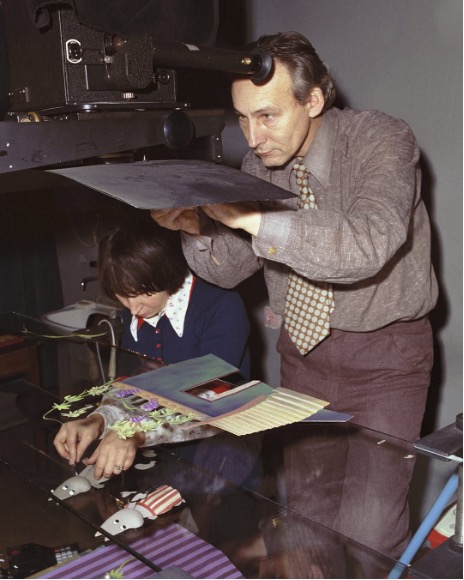
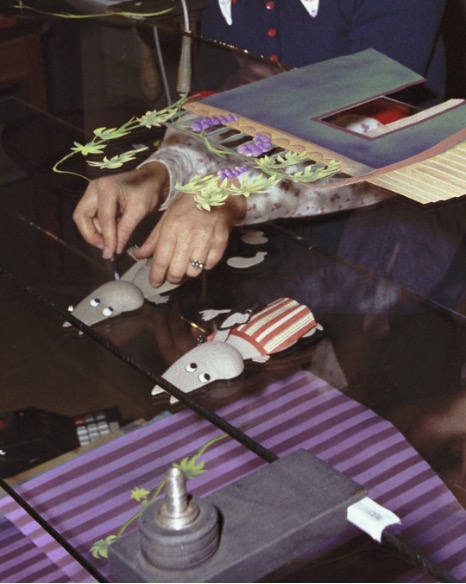
In 1981 the series was acquired by ITV and given to Film Fair, whose adaptations of children’s book classics, Paddington and The Wombles had already been a huge hits for the BBC. Anne Wood adapted the scripts and was immediately smitten. ‘The important thing about the Moomins is that it was made with great skill, with great respect to Tove Jansson and ultimately made with love. I later met some of the animators from Studio Se-ma-for and used them on my own series, Tots TV, because you don’t get animators of their calibre very often.’
Wood became children’s TV royalty, founding Ragdoll productions and creating a string of classics, including Rosie and Jim, In the Night Garden and the world conquering Teletubbies. She was perfectly placed to take on the Moomin series, with a deep knowledge of children’s literature. In 1969 she set up the Federation of Children’s Book Groups, a charity which promotes reading for pleasure to this day. In the 70s she pivoted into children’s television where she produced ITV’s The Book Tower, an influential children’s literature show memorably presented by Doctor Who’s Tom Baker.
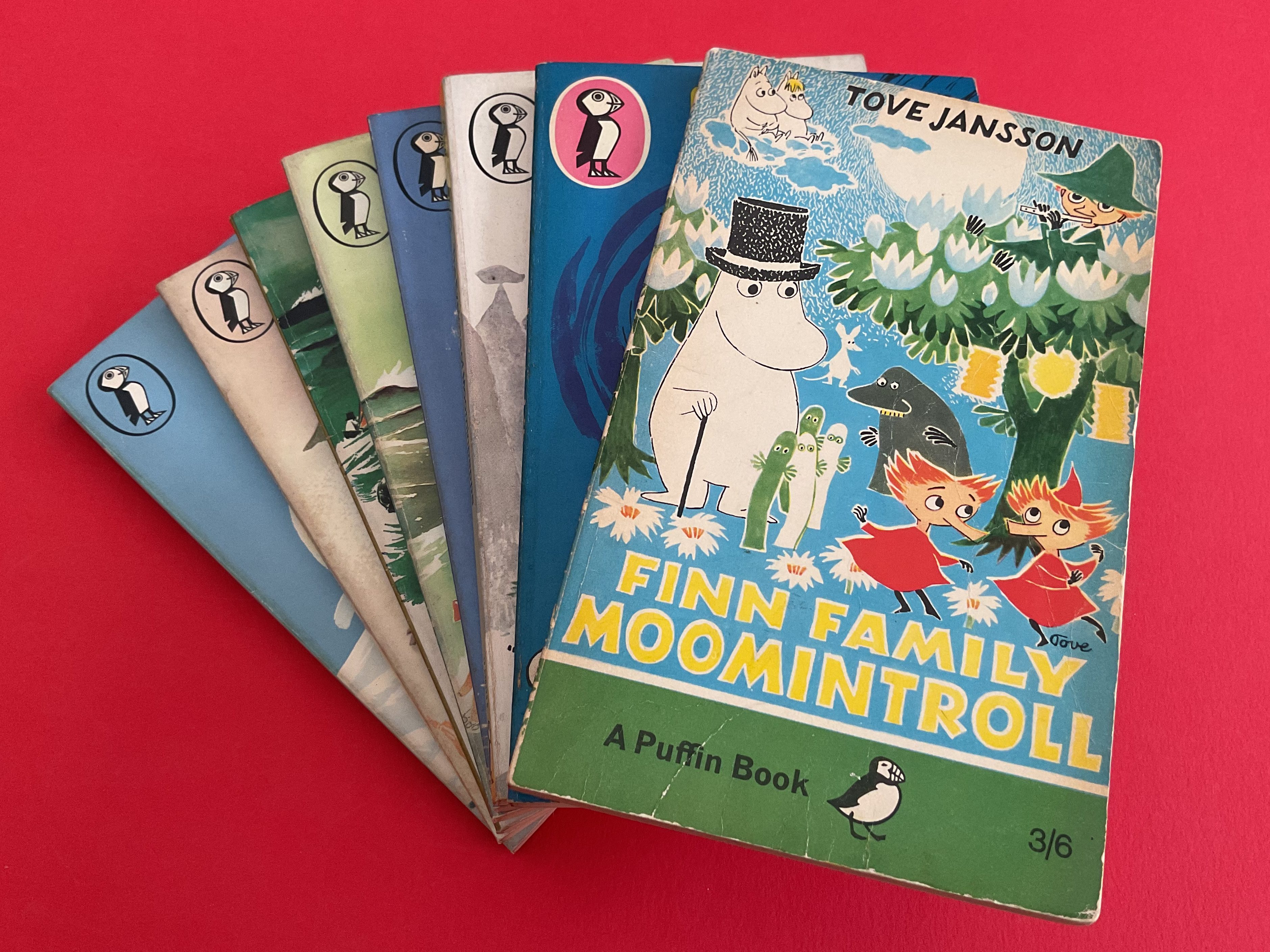
‘I totally revered Tove’s original books,’ Woods says. ‘So when I was writing the scripts for my version of the series I constantly referred to the Puffin paperbacks, marked up in pen with all the relevant dialogue.’ Like The Magic Roundabout before it, the original scripts were thrown out and episodes cut down from ten minutes to five minute broadcasts, (mostly) suitable for much younger viewers watching ITV’s 4.15 slot.
The Moomins took two years to bring to screen, during which time a couple of uniquely British elements were added to the mix. The narrator was Richard Murdoch, a veteran of film and radio musical comedy. He fit into a tradition of using well established but quirky voice talent on children’s TV, following Arthur Lowe’s turn on the Mr Men and Michael Hordern’s Paddington. Unlike those actors, who managed to combine warmth with world weariness, Murdoch poured his considerable comic talents into the Moomins, gamely attempting everything from the hippiefied Snufkin to an unhinged falsetto for Little My.

And if Murdoch sounded like he’d recently been unfrozen from a performance of a 1950s Radio Four comedy, the soundtrack appeared to have been beamed in from another reality altogether. Where the original Polish version had a somewhat melancholic classical score, Anne Wood decided she needed something that would match the unique otherworldliness of Jansson’s creation. She found what she was looking for in Leeds.
Attending a production of Useful Vices by avant garde co-operative Impact Theatre, she was struck by the music composed by two of the company’s performers, Graeme Miller and Steve Shill. Although fascinated by soundtrack music, they didn’t consider themselves composers, but ‘actors pretending to be musicians.’ Their sound is described by Miller as ‘ethno-tech’, a combination of early Casio synthesiser, ethnological instruments including the thumb piano, accordion and pipes and novelty items including a set of miniature electronic tom-toms. All played in a minor key.
Considering the brevity of each episode, the theme tune had to work hard, quickly easing viewers into what they were about to see, without being irritating. The Moomin theme was a masterclass, haunting, wistful and otherworldly. ‘Writing a theme for a children’s TV series is like writing an ice cream van jingle in a way,’ Miller says. ‘It is injected right into people’s consciousness.’
Unlike many children’s TV series from the 1980s, The Moomins was never repeated. In a time before most people had access to a VHS or even Betamax recorder, it was seen, but never forgotten. The music, script, colours, textures and haunting storylines seeped into the consciousnesses of a generation of children. Children who unwittingly sat down in front of a colourful animation after school found themselves transported somewhere altogether other. If only Fuzzy Felt had thought to license a Moomin set, they could’ve continued their adventures off screen.


