Television producer and writer Jake Hayes looks back at his attempts to get more children’s books on the telly and asks why we don’t see more coverage on our screens.
As a child my nose was either in a book or pressed up against the television screen. After school I would position myself about a metre away from our black and white set and switch between children’s programmes on BBC and ITV. I watched everything. Then at 5:35, after Blue Peter, I’d switch off and lie back in my beanbag with a Puffin paperback until supper.
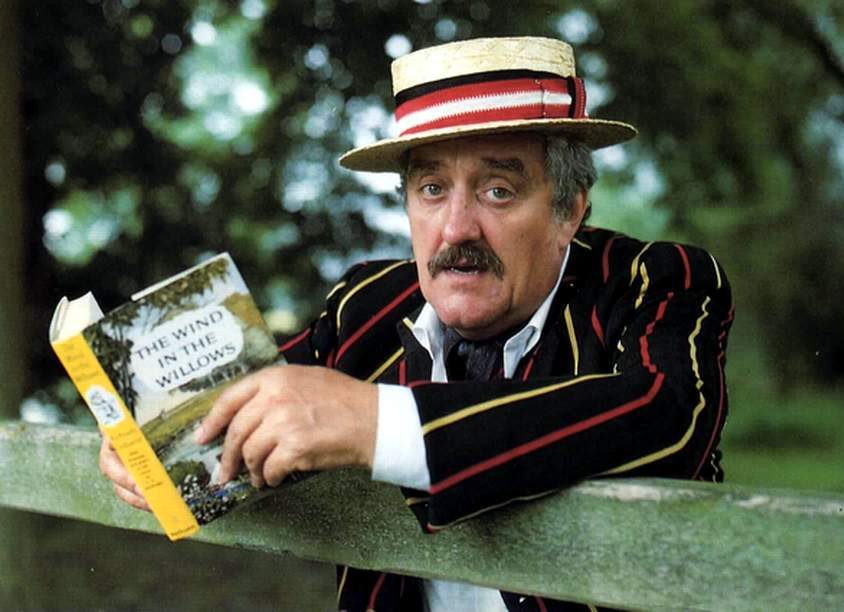
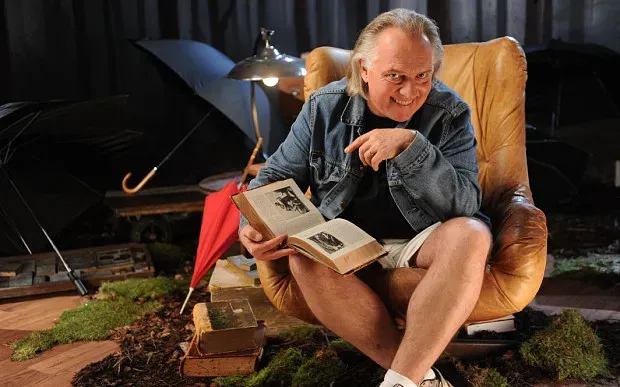
Occasionally my twin passions would overlap. Favourite authors sometimes made an appearance on the Saturday morning show, Multi-Coloured Swap Shop. My favourite Doctor Who, Tom Baker presented The Book Tower on ITV. Then in 1986 the usually sedate Jackanory showcased comedian Rik Mayall’s thrillingly subversive reading of Roald Dahl’s (already subversive) George’s Marvellous Medicine.
If I was growing up today my experience would be very different. In 2024, children’s books and their creators barely appear on television at all. There are no book review shows, they’re ignored by celebrity book clubs and even that faithful bastion of wholesome edutainment, Blue Peter has dropped its children’s books award. It’s an issue that’s long vexed me and one that would become a defining part of my own career in TV.
A Fortunate Event

In autumn 2002 I was employed as a researcher in the Arts documentary unit at BBC Bristol. My boss, executive producer Michael Poole, was aware of my knowledge and love for children’s literature – an interest he shared, having previously produced the 1998 BBC Two series, An Awfully Big Adventure, about the golden age of children’s literature.
On my first day he asked me to contact the American author, Daniel Handler, whose books as Lemony Snicket were international bestsellers. I spent the day researching the A Series of Unfortunate Events author and writing a proposal, before picking up the phone to his literary agent in LA.
‘Would Mr Handler be interested in being the subject of a television documentary for the BBC television?’ I asked.
‘Yes siree.’
A few months later a profile of the Lemony Snicket author aired on BBC Four. This was easy! I was being paid to indulge my passion and helping brilliant children’s books reach a wider audience.
The Big Read

The following spring we launched The Big Read, an ambitious, year long book event on BBC Two. Its aim was to find ‘the nation’s best-loved novel’ as voted for by readers and viewers. Over three-quarters of a million votes were cast and The Big Read became a runaway success both as a television event and as a means of selling books.
Children’s literature was particularly well represented in the poll, accounting for over a third of the top 100. Many more were adult titles studied in schools, or crossover books popular with young adults. At number one was a child adjacent title, JRR Tolkien’s The Lord of the Rings. There was also love for Jacqueline Wilson, J.K. Rowling and Roald Dahl, who all featured four times each.
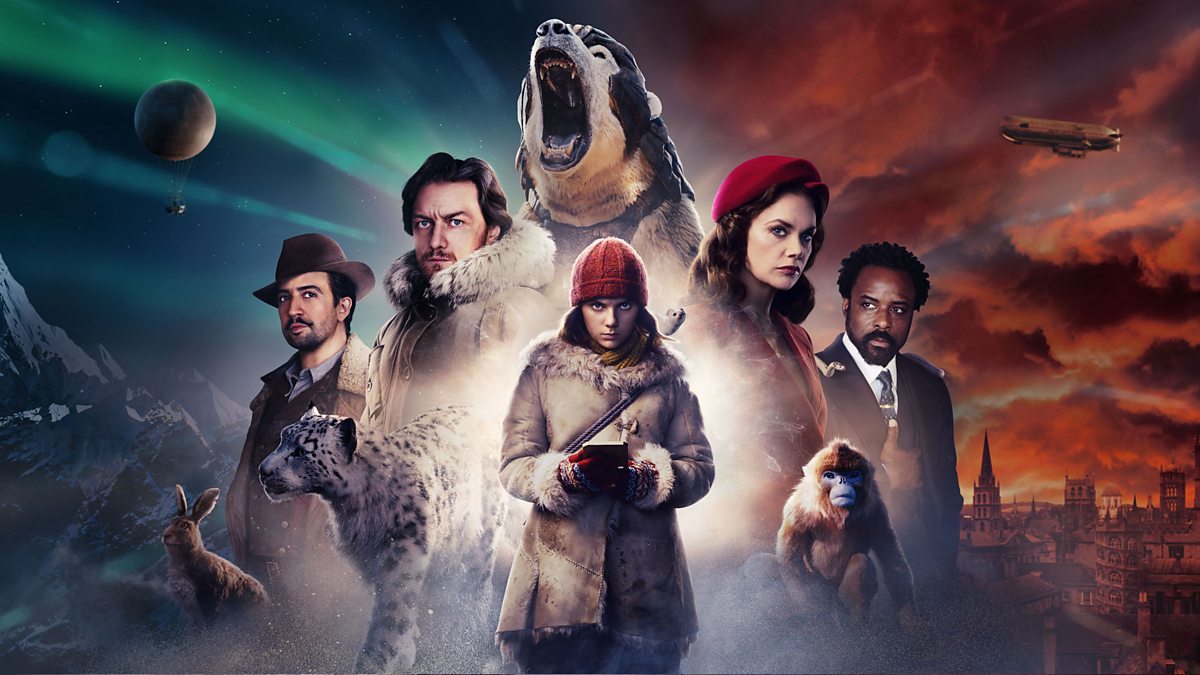
At number three was Philip Pullman’s recently completed His Dark Materials trilogy. An accompanying documentary was produced, helping make Pullman the greatest beneficiary of the event. His books sold an impressive 170,000 books in the last three months of 2003 compared to 50,000 for The Lord of the Rings.
Other contemporary children’s authors included Anthony Horowitz, Louis Sachar and Malorie Blackman, whose Noughts and Crosses had been published in paperback in April 2002. Following the publication of the top 100, sales hit an upward trajectory continuing for several years, creating a bona fide bestseller.

It’s hard to say for sure whether the appearance in the poll was the defining factor in the book’s success, but I would argue that it gave Blackman’s career a significant boost. Noughts and Crosses was later adapted for television and there was a retrospective BBC Imagine documentary in 2022 about her life and career.
One undeniable truth I learned from The Big Read was that children’s literature was thriving and continued to be a central part of British cultural life. I assumed that the television gatekeepers would see this too and allow us to carve out more space in the schedules for children’s books and their authors.
You should read children’s books
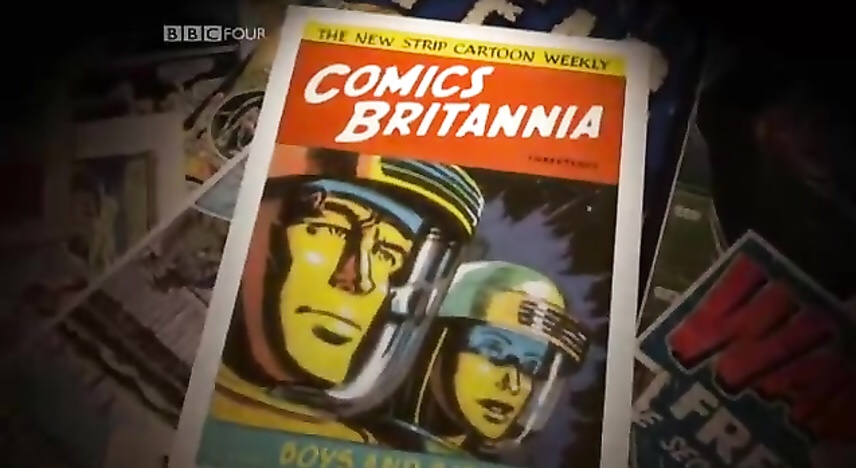
We went on to make several series looking at children’s reading – including BBC Four’s Comics Britannia (2007) and Picture Book – An Illustrated History of Children’s Literature (2008). By this stage it was clear that we were the only people operating in this space. In the 20 years that followed The Big Read, the only substantial factual offering about children’s books from channels other from the BBC was Channel 4’s list show, Britain’s Favourite Children’s Books (2015) presented by celebrity author David Walliams.
After Picture Book things became harder still. That series had been well received but rated averagely – at around 300,000 viewers per episode. For comparison, a BBC Four hit from this period would be anything above half a million. Our biggest programmes were nostalgic documentaries about defunct modes of transport such as steam trains, ocean liners and trams which would regularly rate close to a million. As a result, the channel’s commissioners and editors became increasingly focussed on serving this older, largely male demographic.

When Malorie Blackman became children’s laureate in 2013, a time when there was a real buzz around YA literature, we proposed a documentary that would show the vibrancy of the current children’s book scene, fronted by an author who showed the direction of travel in the publishing industry. The idea raised a confused shrug from the channel and subsequent ideas fronted by Chris Riddell and the (then) telly friendly David Walliams were also rejected.
Why was this? Ratings were certainly an issue, but I found that the lack of engagement in the names we were putting forward was a more significant problem. I suspected they saw children’s books as a lesser form of literature with little relevance to adult viewers. Novelist Martin Amis summed up this attitude when he said he would only write for children if he “had a serious brain injury.” Amis believed that it would require him to produce work at “a lower register.”

Katherine Rundell addressed this attitude in her delightful 2019 polemic Why You Should Read Children’s Books (Even Though You are Old and Wise).
“There is a particular smile that some people give when I tell them what I do – roughly the same smile I’d expect had I told them I make miniature bathroom furniture out of matchboxes for the elves.”
Ironically she was one of the few potential presenters I pitched who didn’t elicit that “particular smile.” This was, I suspect, because I sold her to my largely Oxbridge educated superiors on the basis of her academic achievements as a fellow in English Literature at All Souls College, Oxford. Tellingly, when she eventually did appear on BBC Four, presenting the history documentary Abducted: Elizabeth I’s Child Actors, Katherine wasn’t talking about children’s books.
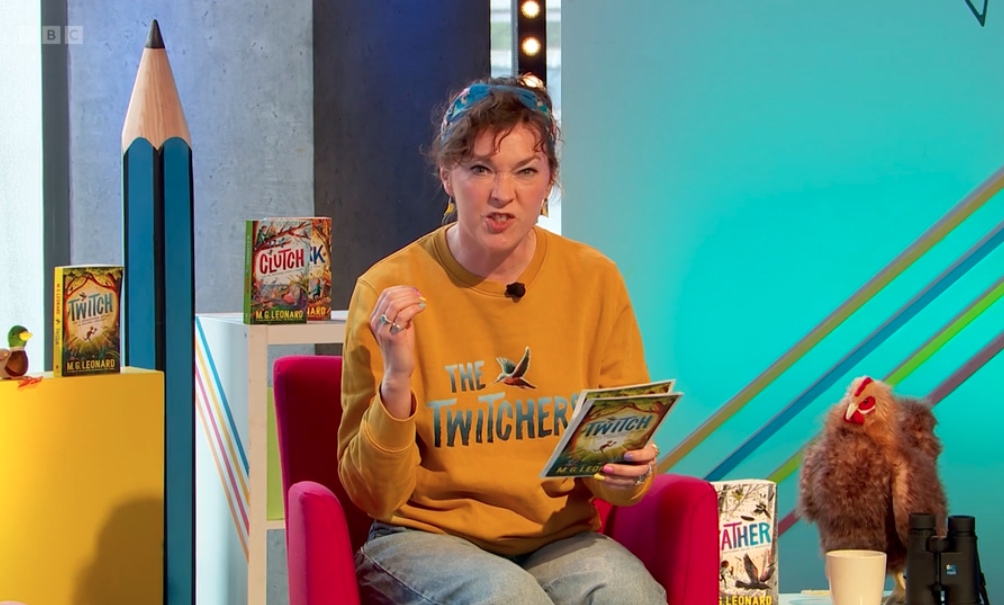
One children’s author who has discussed her books on television is M.G. Leonard, bestselling author of Beetle Boy and the Twitchers series. Despite making it onto our screens she believes there is still little appetite for contemporary children’s writing on TV.
“Most programmes are focused on the books the adult viewer read when they were a child. This leaves very little space for current authors, who are usually asked to talk about the dead author, rather than their own work.”
In part two I look at the current state of children’s books on the box and ask how useful TV is as a platform for children’s authors. With contributions from M.G. Leonard, Jack Meggitt-Philips and Gareth P. Jones.
This article was originally written as part of my MA in writing for young people at Bath Spa University.


Gobsmacking. Thank you for sharing!Sent from my iPhone
LikeLiked by 1 person
This is full of great insights. I’m going to see if I can hunt down some of these programmes you mention.
Interesting to note how many books are still brought to the stage in plays and musicals – older books of course, so all the family can relate. Maybe more contemporary literature could also be brought to the stage? The Tsangs’ book Sam Wu is Not Afraid of Ghosts was in the theatre recently.
LikeLike
Thank you! I’ve now added a few links to some of the programmes mentioned. I’ve heard great things about the Sam Wu play, would also love to see the adaptation of Sophie Anderson’s House with Chicken Legs.
LikeLiked by 1 person